There are fashion designers. There are costume designers. And then there was Bob Mackie.
Hollywood has lost one of its great originals: the man who understood that a star should not merely enter a room, she should arrive, sparkle, turn heads and, preferably, leave a little trail of feathers behind her.
Bob Mackie died on September 14, aged 87. For more than five decades he dressed the women, and men, who made entertainment into spectacle. Judy Garland, Marilyn Monroe, Cher, Diana Ross, Tina Turner, Carol Burnett, Elton John, Liza Minnelli, Dolly Parton, Madonna and, much later, Miley Cyrus and Sabrina Carpenter. The list goes on because Mackie was never really dressing a generation. He was dressing the idea of celebrity itself.
The Sultan of Sequins was an entirely appropriate title.
Sequins, rhinestones, feathers, fringe, crystals, skin, colour and extraordinary silhouettes were his vocabulary. But underneath all that glitter was something considerably more sophisticated: an understanding of movement. Mackie knew that clothes for entertainment were not museum pieces. They had to move, catch the light, reveal the body, exaggerate a gesture and survive the demands of a stage. He could take something that, in lesser hands, might have looked like camp or even bad taste and turn it into theatre.
That was his genius.
And what is particularly fascinating from a fashion point of view is where this empire was built. Los Angeles was the capital of cinema and television, but it was hardly Florence or Lyon when it came to traditional textile culture. Mackie solved the problem the way any resourceful creator does: he hunted.
Markets. Antique dealers. Unusual fabric suppliers. Vintage finds. Whatever could deliver the right surface, the right sparkle or the right theatrical effect. Then came the army behind the glamour, cutters, embroiderers, beaders, makers and technicians capable of turning a sketch into a finished costume at speed, because in entertainment there is always another show, another performance, another deadline. Mackie understood something European fashion sometimes forgets: the audience doesn’t buy a seam. They buy the fantasy.
And then came Barbie.
While European designers were busy building fashion houses, Mackie found another diva, only 11½ inches tall.
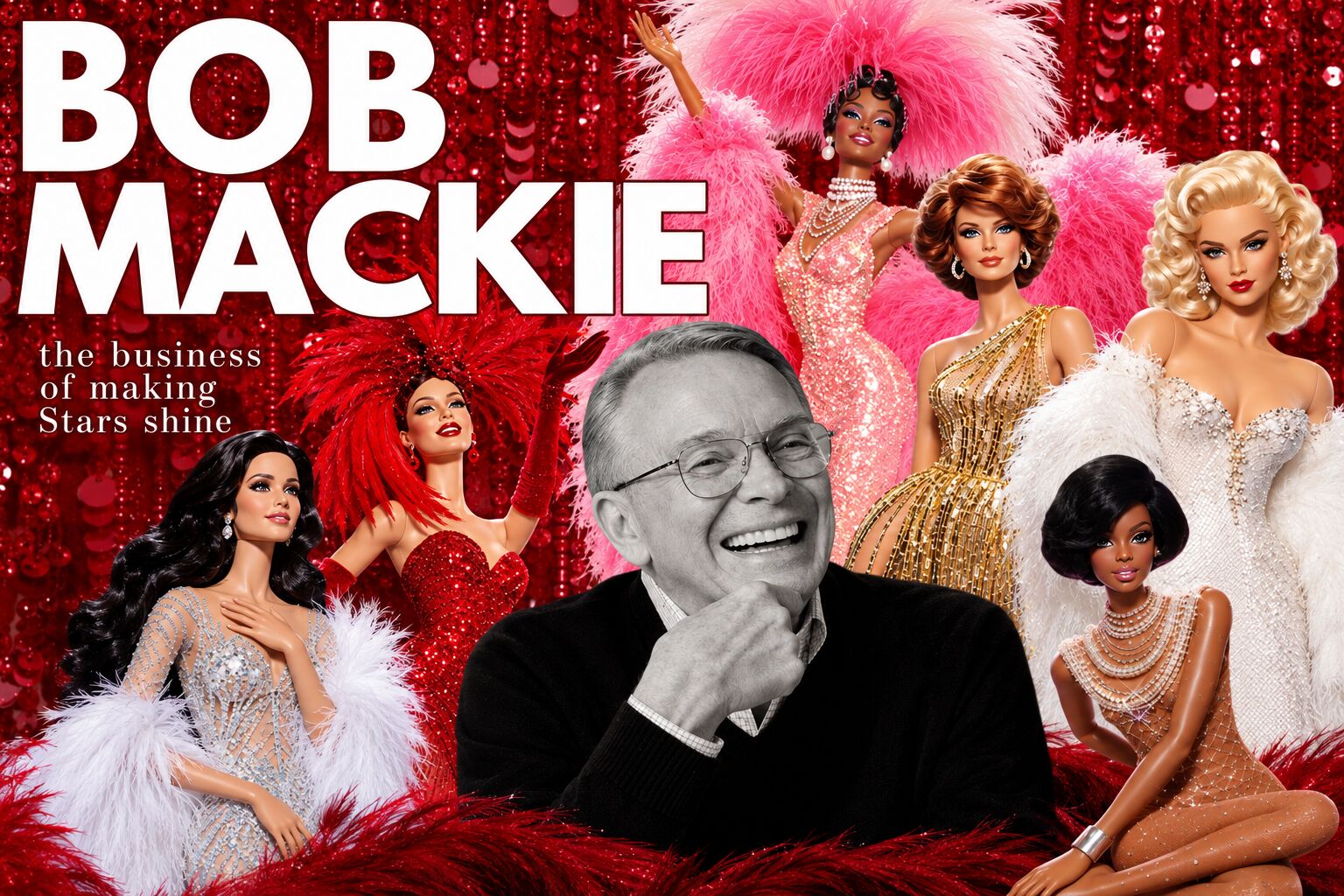
His collaboration with Mattel turned Barbie into a miniature Mackie fantasy: sequins, feathers, feathers again, outrageous glamour and the kind of clothes little girls could only dream of wearing. Barbie became his commercial global stage, allowing his visual language to travel far beyond Hollywood. He created costumes for nearly two dozen Barbie dolls in The Bob Mackie Collection. It was a rather brilliant twist.
Other designers dressed women and built empires through fashion houses. Mackie dressed the divas and then dressed the doll who dreamed of becoming one.
His influence is still visible. Cher’s legendary looks remain reference points. Marilyn Monroe’s famous 1962 “Happy Birthday” dress began with Mackie’s sketching work, while his archive has resurfaced on contemporary stars including Sabrina Carpenter, Zendaya and Miley Cyrus.
Nine Emmys, a Tony, three Oscar nominations, the awards tell part of the story.
The bigger achievement was cultural. Bob Mackie made glamour feel fearless. He understood that entertainment was allowed to be excessive. That a woman could be sexy without apologising for it. That colour could be loud. That feathers were not frivolous. That crystals could be serious business. And that fashion, at its most powerful, does not always need to behave itself.
Hollywood has lost its Sultan of Sequins. But Mackie’s stars are still dancing.
And somewhere, presumably, Barbie has already opened the wardrobe.
Ci sono gli stilisti. Ci sono i costumisti. E poi c’era Bob Mackie.
Hollywood ha perso uno dei suoi più grandi talenti originali: l’uomo che aveva capito che una star non dovrebbe semplicemente entrare in una stanza, ma fare il suo ingresso, brillare, attirare ogni sguardo e, possibilmente, lasciare dietro di sé una piccola scia di piume.
Bob Mackie è morto il 14 settembre, all’età di 87 anni. Per oltre cinque decenni ha vestito le donne, e gli uomini, che hanno trasformato l’intrattenimento in spettacolo. Judy Garland, Marilyn Monroe, Cher, Diana Ross, Tina Turner, Carol Burnett, Elton John, Liza Minnelli, Dolly Parton, Madonna e, molti anni dopo, Miley Cyrus e Sabrina Carpenter. L’elenco potrebbe continuare, perché Mackie non ha mai vestito davvero una singola generazione: ha vestito l’idea stessa di celebrità.
Il titolo di “Sultano delle paillettes” era assolutamente appropriato.
Paillettes, strass, piume, frange, cristalli, pelle scoperta, colore e silhouette straordinarie erano il suo vocabolario. Ma sotto tutto quello scintillio si nascondeva qualcosa di molto più sofisticato: la comprensione del movimento. Mackie sapeva che gli abiti destinati allo spettacolo non erano pezzi da museo. Dovevano muoversi, catturare la luce, rivelare il corpo, amplificare un gesto e resistere alle esigenze del palcoscenico. Riusciva a prendere qualcosa che, nelle mani di altri, avrebbe potuto apparire eccessivo o persino di cattivo gusto e trasformarlo in teatro.
Era questo il suo genio.
E ciò che risulta particolarmente affascinante dal punto di vista della moda è il luogo in cui questo impero venne costruito. Los Angeles era la capitale del cinema e della televisione, ma non poteva certo essere paragonata a Firenze o Lione per quanto riguardava la tradizione tessile. Mackie risolse il problema come farebbe qualsiasi creatore intraprendente: andando a caccia.
Mercati. Antiquari. Fornitori di tessuti insoliti. Pezzi vintage. Tutto ciò che potesse offrire la superficie giusta, la brillantezza perfetta o l’effetto teatrale desiderato. Poi arrivava l’esercito dietro il glamour: tagliatori, ricamatori, artigiani specializzati nell’applicazione di perline, modellisti e tecnici capaci di trasformare rapidamente un bozzetto in un costume finito. Perché, nel mondo dello spettacolo, ci sono sempre un altro show, un’altra esibizione e un’altra scadenza. Mackie aveva compreso qualcosa che la moda europea a volte dimentica: il pubblico non compra una cucitura. Compra la fantasia.
E poi arrivò Barbie.
Mentre gli stilisti europei erano impegnati a costruire le proprie maison, Mackie trovò un’altra diva, alta soltanto 29 centimetri.
La sua collaborazione con Mattel trasformò Barbie in una fantasia in miniatura firmata Mackie: paillettes, piume, ancora piume, un glamour sfrenato e il genere di abiti che le bambine potevano soltanto sognare di indossare. Barbie divenne il suo palcoscenico commerciale globale, permettendo al suo linguaggio visivo di viaggiare ben oltre Hollywood. Creò i costumi per quasi due dozzine di bambole appartenenti alla Bob Mackie Collection. Fu una svolta davvero brillante.
Altri stilisti vestivano le donne e costruivano imperi attraverso le proprie case di moda. Mackie vestiva le dive e poi vestiva la bambola che sognava di diventare una di loro.
La sua influenza è visibile ancora oggi. I leggendari look di Cher continuano a essere punti di riferimento. Il celebre abito “Happy Birthday” indossato da Marilyn Monroe nel 1962 nacque dal lavoro di Mackie come disegnatore, mentre alcuni capi del suo archivio sono riapparsi su star contemporanee come Sabrina Carpent