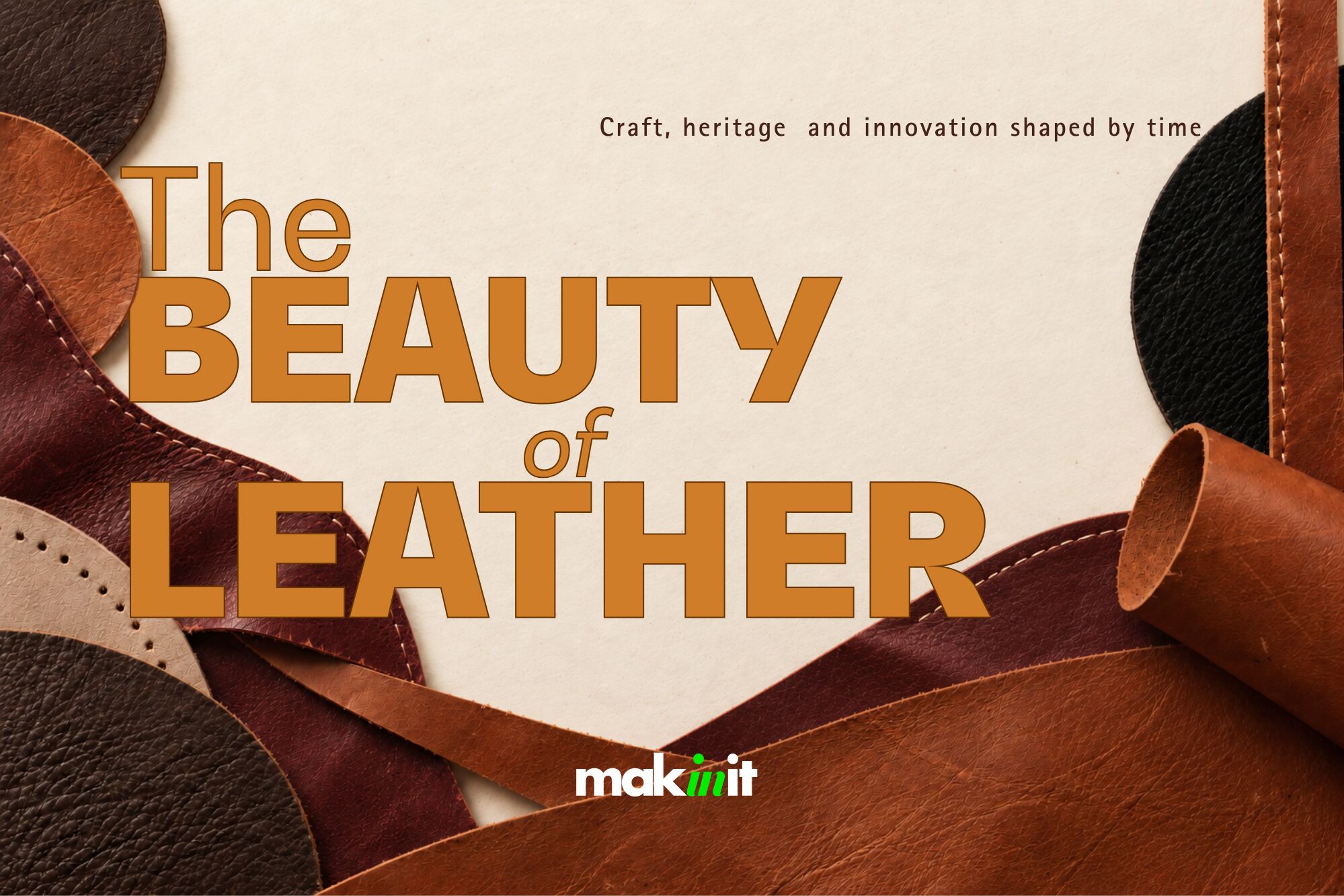
Milan is about to put leather on the runway of the future, while fashion debates whether it should still have a place in it.
Next week, the leather crowd lands in Milan for its seasonal ritual: colour, surface, finish, touch. The swatches become moodboards, the moodboards become collections, and somewhere between a new metallic finish and an impossibly soft hand, the next season begins to take shape. Leather remains one of fashion’s great seducers. And yet, increasingly, it is being asked to defend itself.
Leather: sustainable or fashion’s latest guilty pleasure?
It’s a slightly strange question when you consider that luxury and leather have been flirting, quite successfully, for centuries.
Hermès. Gucci. Prada. Bottega Veneta. Ferragamo. Louis Vuitton.
These houses didn’t build their mythology around disposable fashion. They built it around leather, craftsmanship and objects worth keeping. The handbag that moves from mother to daughter. The shoe that develops a patina rather than losing its appeal. The trunk that survives the journey, the decade and eventually becomes an heirloom. This is the part of the sustainability conversation that fashion sometimes seems to forget. Longevity is not a trend.
Leather is also, fundamentally, a by-product of the food industry, a material that has historically been given a second life through craftsmanship and design. So when the industry proposes synthetic alternatives, the obvious question is: alternative to what, exactly? Because synthetic does not automatically mean sustainable. Nor does vegan. Nor does putting a reassuring green word on a hangtag.
The more interesting conversation is about the entire life of the product: its origins, its chemistry, its durability, its repairability, its recyclability and whether we are still wearing it ten years from now. Fashion loves a new material. Luxury, historically, loved a material that could last. And there is something deliciously contradictory about an industry obsessed with heritage suddenly becoming embarrassed by one of the materials that created that heritage in the first place.
Perhaps the real opportunity isn’t to cancel leather. Perhaps it is to raise the bar.
Cleaner production. Better traceability. Smarter tanning. More responsible sourcing. Better use of every hide. Design that encourages repair rather than replacement.
In other words: make leather better, not simply make it disappear.
Because if the future of luxury is going to be about fewer, better things, then perhaps we should be looking at the materials that already understand the assignment.
Next week, Milan will give us a glimpse of what leather can become. And I, for one, will be looking very closely. Because fashion may be obsessed with what’s next. Luxury should still care about what lasts.
Leather isn’t going anywhere. The interesting question is how intelligently we choose to use it.
Milano si prepara a portare sulla passerella del futuro la pelle, proprio mentre il mondo della moda si interroga sulla possibilità che abbia ancora un posto nel suo futuro.
La prossima settimana, il mondo della pelle arriva a Milano per il suo rituale stagionale: colore, superficie, finitura, tatto. I campioni diventano moodboard, le moodboard diventano collezioni e, da qualche parte tra una nuova finitura metallizzata e una morbidezza al tatto quasi impossibile, la prossima stagione inizia a prendere forma. La pelle rimane una delle grandi seduttrici della moda. Eppure, sempre più spesso, le viene chiesto di difendersi.
Pelle: sostenibilità o ultimo guilty pleasure della moda? È una domanda piuttosto curiosa, se si considera che lusso e pelle flirtano, con notevole successo, da secoli.
Hermès. Gucci. Prada. Bottega Veneta. Ferragamo. Louis Vuitton.
Queste maison non hanno costruito il proprio mito attorno alla moda usa e getta. Lo hanno costruito sulla pelle, sull’artigianalità e su oggetti destinati a durare. La borsa che passa da madre a figlia. La scarpa che sviluppa una patina invece di perdere il proprio fascino. Il baule che sopravvive al viaggio, al decennio e che, alla fine, diventa un pezzo di famiglia. È questo l’aspetto del discorso sulla sostenibilità che la moda, a volte, sembra dimenticare. La longevità non è una tendenza.
La pelle è anche, fondamentalmente, un sottoprodotto dell’industria alimentare, un materiale a cui storicamente è stata data una seconda vita attraverso l’artigianalità e il design. Quindi, quando l’industria propone alternative sintetiche, la domanda più ovvia è: alternativa a cosa, esattamente? Perché sintetico non significa automaticamente sostenibile. E nemmeno vegan. Né basta mettere una rassicurante parola “green” su un’etichetta.
La conversazione più interessante riguarda l’intero ciclo di vita del prodotto: la sua origine, la chimica utilizzata, la sua durata, la possibilità di ripararlo, la sua riciclabilità e, soprattutto, se lo indosseremo ancora tra dieci anni.
La moda ama i materiali nuovi. Il lusso, storicamente, ha amato i materiali capaci di durare.
E c’è qualcosa di deliziosamente contraddittorio in un’industria ossessionata dall’heritage che, improvvisamente, sembra quasi imbarazzata da uno dei materiali che ha contribuito a costruire proprio quell’heritage.
Forse la vera opportunità non è cancellare la pelle. Forse è alzare l’asticella.
Produzioni più pulite. Maggiore tracciabilità. Concia più intelligente. Approvvigionamento più responsabile. Un utilizzo migliore di ogni singola pelle. Un design che incoraggi la riparazione invece della sostituzione.
In altre parole: rendere la pelle migliore, non semplicemente farla scomparire.
Perché, se il futuro del lusso sarà fatto di meno cose, ma migliori, allora forse dovremmo guardare proprio ai materiali che hanno già capito la regola del gioco.
La prossima settimana, Milano ci offrirà un assaggio di ciò che la pelle può diventare. E io, personalmente, guarderò molto attentamente. Perché la moda può essere ossessionata da ciò che viene dopo. Il lusso dovrebbe continuare a preoccuparsi di ciò che dura.
La pelle non sta andando da nessuna parte. La domanda interessante è quanto intelligentemente scegliamo di utilizzarla.