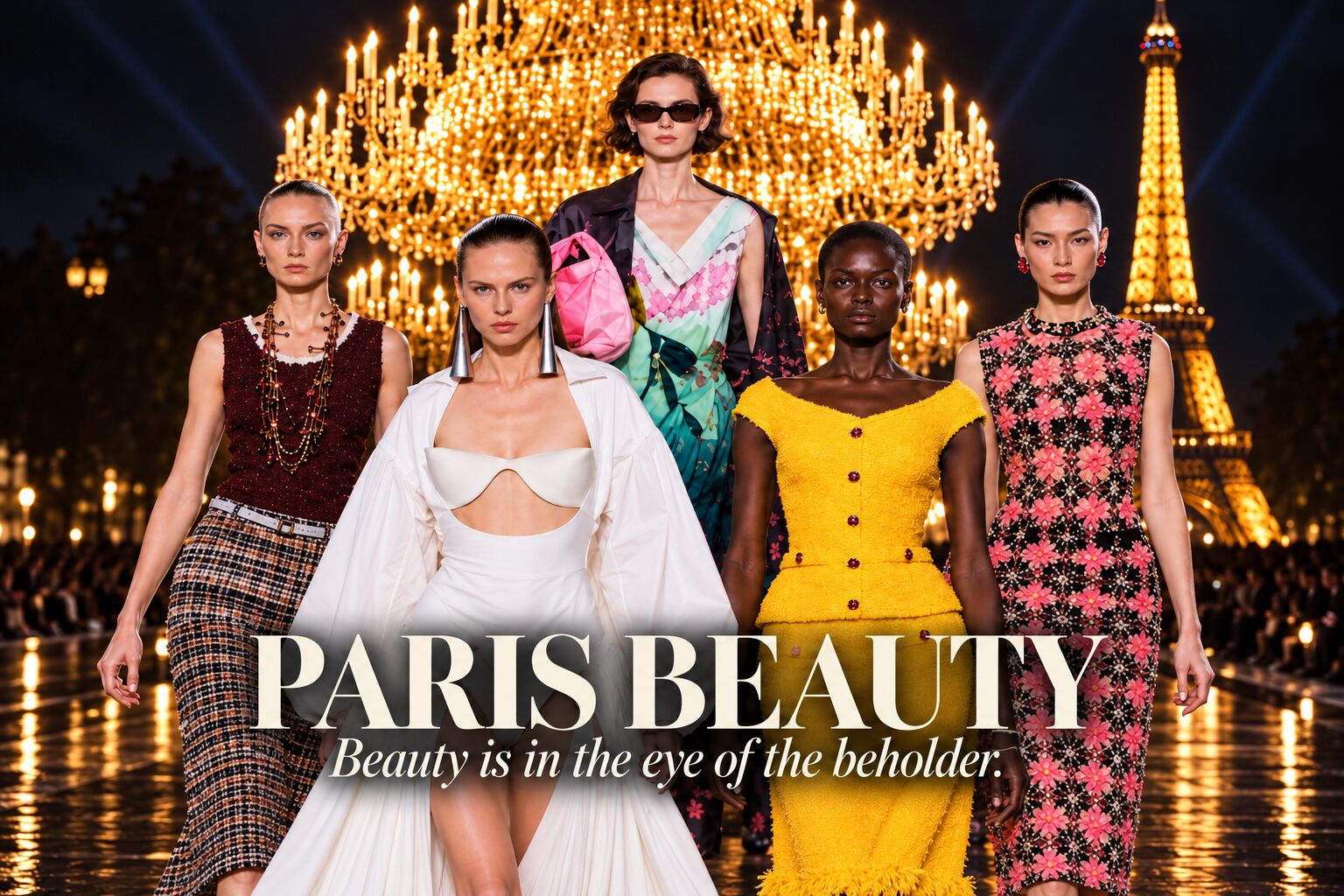
Paris Fashion Week closed the European fashion season with something that felt surprisingly radical: beauty.
Not beauty as decoration. Not beauty as escapism. Beauty as an act of resistance.
Outside the fashion bubble, the world feels increasingly cold, politically, economically and emotionally unstable. Inside it, an extraordinary amount of human energy, intelligence and sheer hard work had gone into making clothes that were designed to make us feel something.
And perhaps that is precisely the point.
Paris did not answer uncertainty with minimalism. It answered with culture, craftsmanship, fantasy and the rather glorious idea that getting dressed still matters.
At Saint Laurent, Anthony Vaccarello turned the collection into a sun-king spectacle of gold: grand, sensual and unapologetically glamorous. Valentino brought culture into the room with a collection that practically invited you to pick up a book before picking up your phone. There was intelligence beneath the beauty.
Then came Dries Van Noten, where Julian Klausner is proving himself to be a designer with something increasingly rare: a point of view. His work felt assured, sophisticated and, frankly, better than good.
At Duran Lantink, Jean Paul Gaultier’s codes were taken apart and joyfully put back together. The cone bra was revisited, corsetry returned, bodies were celebrated and the whole thing came with a wink. Sexy, clever and just the right side of outrageous.
And then came Blazy at Chanel, closing the week with a Grand Palais spectacle.
Here was Chanel without the museum-piece stiffness: soft pastels, softened silhouettes, heels, dresses, legs and femininity; with enough variations on the house codes to make the collection feel like a fashion free-for-all rather than a history lesson.
The message was remarkably clear.
The silhouette is back.
Dresses are back. Legs are back. Heels are back. Clothes that require a little effort are back.
And after years of dressing down, dressing for algorithms, dressing for comfort and dressing to disappear, there was something rather thrilling about designers asking women to dress up again.
But behind all that glamour was something more important: an enormous collective effort to create beauty.
Hundreds of people: designers, pattern cutters, embroiderers, technicians, makers, stylists, hair and make-up teams, producers and craftspeople, spent months making these moments happen.
That labour matters. Culture matters. Beauty matters.
Fashion is often accused of being frivolous when the world is in trouble. Paris offered the opposite argument. Perhaps because the world is in trouble, we need culture to remind us who we are. We need beautiful things made by human beings. We need imagination, theatre, humour and the confidence to say that life can still be celebrated.
So, next summer, there is a rather simple instruction:
Wear it.
Wear the dress. Wear the heels. Show the legs. Enjoy the silhouette. Buy the beautiful thing, and, ideally, know who made it.
Because beauty is not a distraction from the real world.
Sometimes, it is the reply.
Fuori dal mondo della moda, il mondo appare sempre più freddo, politicamente, economicamente ed emotivamente instabile. Al suo interno, invece, un’enorme quantità di energia umana, intelligenza e puro, instancabile lavoro era stata investita nella creazione di abiti concepiti per farci provare qualcosa.
E forse è proprio questo il punto.
Parigi non ha risposto all’incertezza con il minimalismo. Ha risposto con la cultura, l’artigianalità, la fantasia e con l’idea, decisamente gloriosa, che vestirsi abbia ancora importanza.
Da Saint Laurent, Anthony Vaccarello ha trasformato la collezione in uno spettacolo dorato da Re Sole: grandioso, sensuale e sfacciatamente glamour. Valentino ha portato la cultura nella stanza con una collezione che sembrava quasi invitare a prendere in mano un libro prima di prendere in mano il telefono. Sotto la bellezza c’era intelligenza.
Poi è arrivato Dries Van Noten, dove Julian Klausner sta dimostrando di essere un designer con qualcosa di sempre più raro: una visione personale. Il suo lavoro è apparso sicuro, sofisticato e, francamente, più che buono.
Da Duran Lantink, i codici di Jean Paul Gaultier sono stati smontati e rimessi insieme con gioia. Il reggiseno a cono è stato rivisitato, il corsetto è tornato, i corpi sono stati celebrati e il tutto è stato accompagnato da un pizzico di ironia. Sensuale, intelligente e decisamente dalla parte giusta dell’eccesso.
E poi è arrivato Blazy da Chanel, a chiudere la settimana con uno spettacolo al Grand Palais.
Ecco Chanel senza la rigidità di un pezzo da museo: tonalità pastello, silhouette più morbide, tacchi, abiti, gambe e femminilità; con variazioni sufficienti sui codici della maison da far sembrare la collezione una libera esplorazione della moda, piuttosto che una lezione di storia.
Il messaggio era straordinariamente chiaro.
La silhouette è tornata.
Gli abiti sono tornati. Le gambe sono tornate. I tacchi sono tornati. Sono tornati gli abiti che richiedono un po’ di impegno per essere indossati.
E dopo anni di abbigliamento informale, di vestiti scelti per gli algoritmi, di abiti pensati per il comfort e di look studiati per passare inosservati, c’era qualcosa di decisamente emozionante nel vedere i designer invitare di nuovo le donne a vestirsi con eleganza.
Ma dietro tutto quel glamour c’era qualcosa di più importante: un enorme sforzo collettivo per creare bellezza.
Centinaia di persone — designer, modellisti, ricamatori, tecnici, artigiani, stylist, team di acconciatura e trucco, produttori e professionisti del fare — hanno trascorso mesi a rendere possibili questi momenti.
Quel lavoro conta. La cultura conta. La bellezza conta.
La moda viene spesso accusata di essere frivola quando il mondo è in difficoltà. Parigi ha offerto l’argomento opposto. Forse proprio perché il mondo è in difficoltà, abbiamo bisogno della cultura per ricordarci chi siamo. Abbiamo bisogno di cose belle, realizzate da esseri umani. Abbiamo bisogno di immaginazione, teatralità, umorismo e del coraggio di affermare che la vita può ancora essere celebrata.
Quindi, la prossima estate, c’è un’indicazione piuttosto semplice:
Indossateli.
Indossate l’abito. Indossate i tacchi. Mostrate le gambe. Godetevi la silhouette. Comprate qualcosa di bello e, idealmente, sappiate chi lo ha realizzato.
Perché la bellezza non è una distrazione dal mondo reale.
A volte, è la risposta.