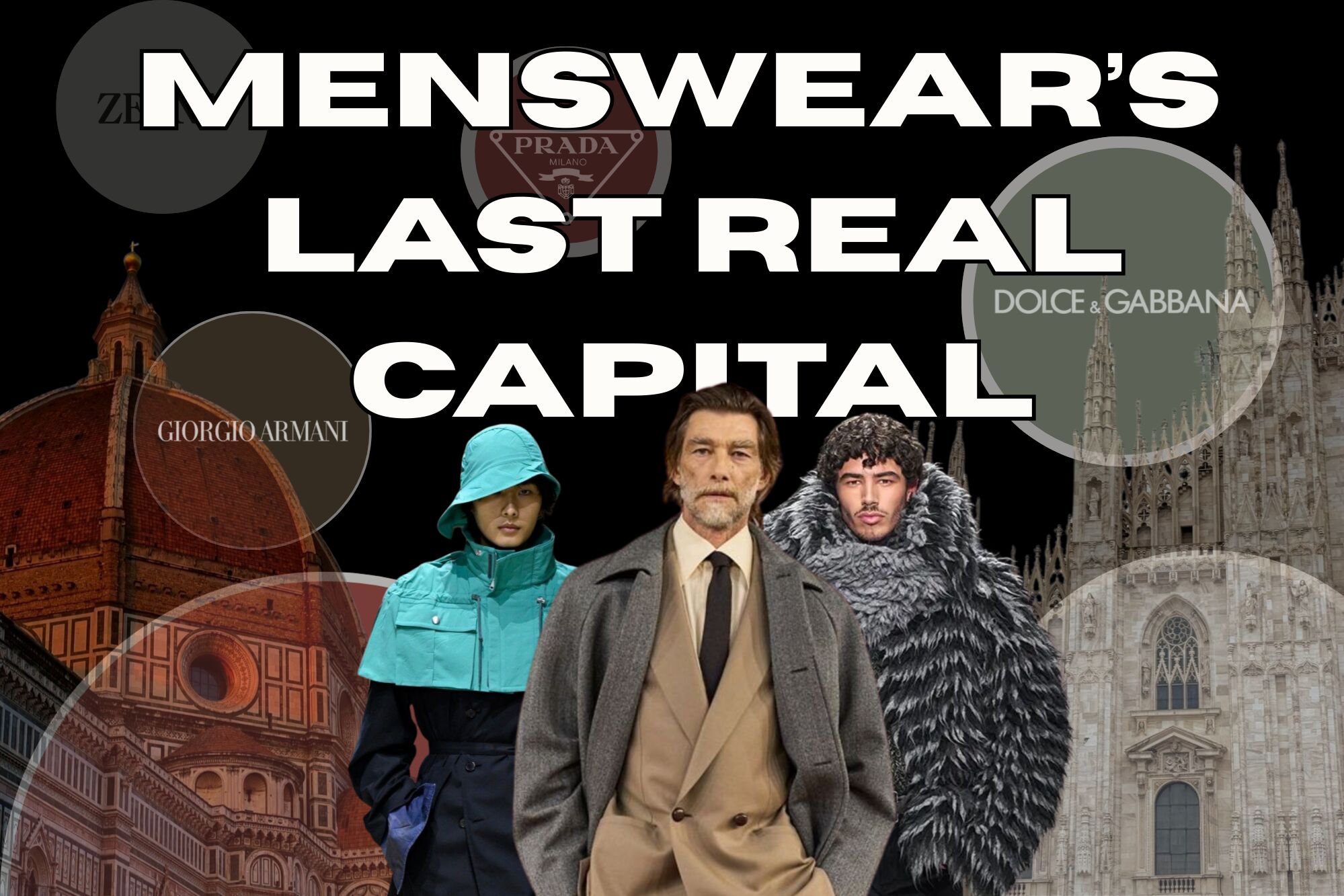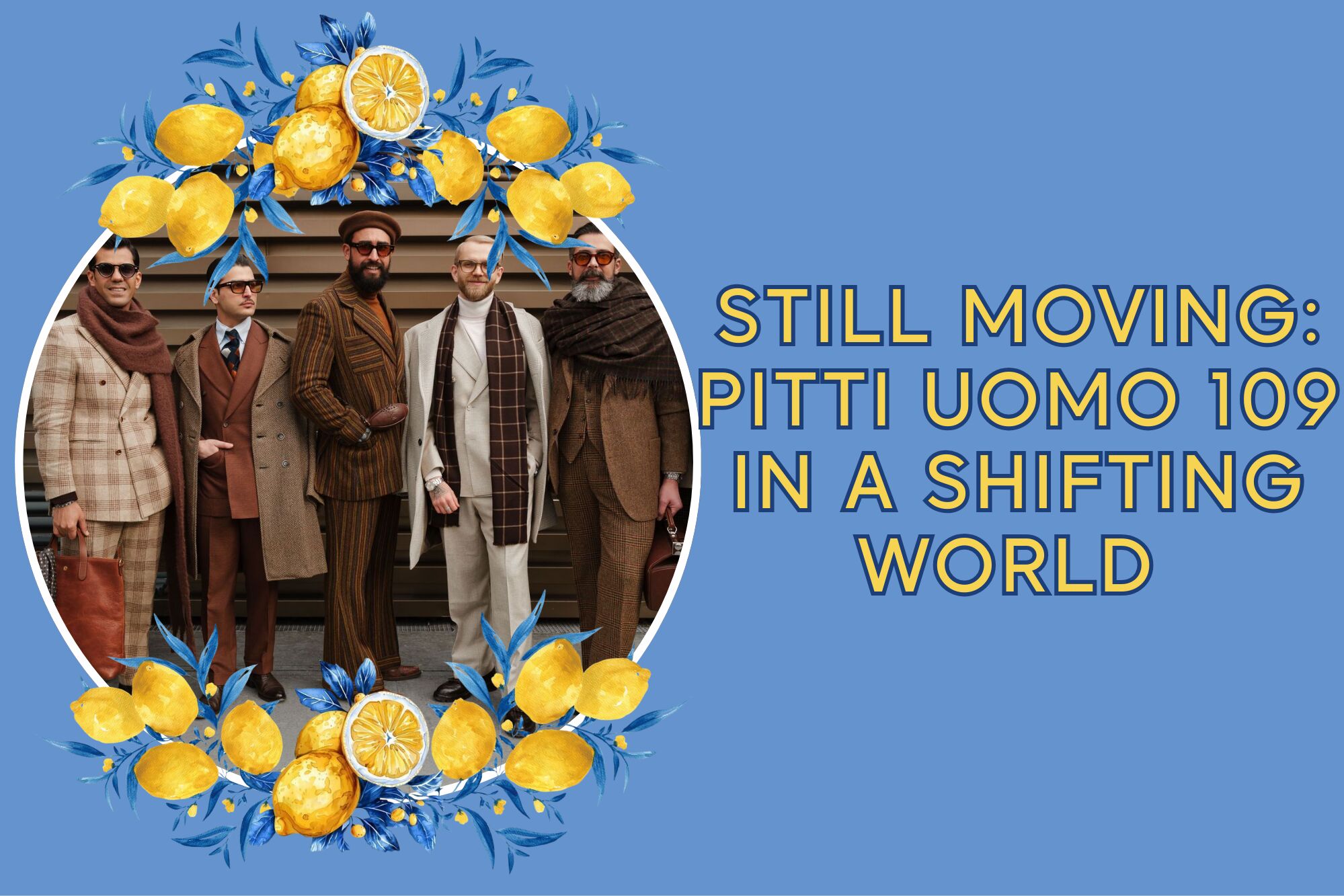
In a season marked by economic anxiety, creative fatigue and a general sense of global unease, Pitti Uomo still does what it has always done best: it shows up. Chaos or not, the Florentine fair remains the reference point for menswear, the place where the industry takes its temperature, even when the reading isn’t entirely comforting.
The peacocks were present, of course. But this time they felt quieter. Colours leaned conservative rather than flamboyant, though not without intent. There was restraint, but also thought. Less shouting, more nuance. A subtle shift that felt intentional, almost grown up. Pitti, after all, has nothing left to prove.
This was the 109th edition, and with it came the familiar frenzy: calendars stacked tighter than a McDonald’s menu, buyers speed-walking between stands, conversations cut short by the next appointment. Pitti still opens the dance, even if the dance floor now feels overcrowded and slightly out of sync. The official theme was “Motion”, but movement here wasn’t always obvious. The fair felt composed, even static at times, not dead, just careful.
What did move things forward came from the margins. Southern Italian brands were the quiet revelation. They brought soul to the Fortezza, blending heritage with genuine creativity, detail with emotion. There was craft, risk and personality, things increasingly rare in a market obsessed with scalability and safety. In a sea of interchangeable jackets and knitwear, these brands reminded us that menswear can still feel human.
Then there was Asia. Korean and broader Asian brands injected the fair with contemporary edge and intellectual curiosity. Their approach to form, proportion and construction felt current without trying too hard. Deconstruction, oversized silhouettes, material experimentation, all handled with confidence. One tailored blazer, wrapped in an unexpected cocoon construction, summed it up perfectly: respectful of tradition, but unafraid to disrupt it. Business, but with bite.
That contrast is telling. Pitti today isn’t about easy answers or instant hits. It’s about editing, questioning, and spotting intent. You don’t come here to be dazzled anymore, you come to understand who still has something to say.
Despite the cracks, Pitti remains essential. Not because it’s perfect, but because it reflects the industry honestly, flaws and all. In troubled times, that kind of clarity matters. Menswear is changing, slowly, unevenly, sometimes reluctantly. And Pitti, still standing, still gathering everyone in one place, remains the mirror we keep coming back to. Whether we like what we see or not.
In una stagione segnata dall’ansia economica, dalla stanchezza creativa e da un diffuso senso di inquietudine globale, Pitti Uomo continua a fare ciò che ha sempre fatto meglio: esserci. Caos o meno, la fiera fiorentina resta il punto di riferimento della moda maschile, il luogo in cui l’industria misura la propria temperatura, anche quando il responso non è del tutto confortante.
I pavoni c’erano, certo. Ma questa volta sembravano più silenziosi. I colori tendevano al conservatore piuttosto che allo sfarzo, senza però rinunciare all’intenzione. C’era misura, ma anche pensiero. Meno grida, più sfumature. Un cambiamento sottile, che appariva deliberato, quasi adulto. Del resto, Pitti non ha più nulla da dimostrare.
Questa era la 109ª edizione e, con essa, il consueto fermento: calendari stipati più di un menu del McDonald’s, buyer che si muovono a passo svelto tra gli stand, conversazioni interrotte dal prossimo appuntamento. Pitti apre ancora le danze, anche se la pista oggi sembra affollata e leggermente fuori tempo. Il tema ufficiale era “Motion”, ma il movimento non era sempre evidente. La fiera appariva composta, a tratti persino statica, non morta, semplicemente cauta.
Ciò che ha davvero fatto avanzare le cose è arrivato dai margini. I brand dell’Italia meridionale sono stati la rivelazione silenziosa. Hanno portato anima alla Fortezza, fondendo heritage e autentica creatività, dettaglio ed emozione. C’erano artigianalità, rischio e personalità, elementi sempre più rari in un mercato ossessionato dalla scalabilità e dalla sicurezza. In un mare di giacche e maglieria intercambiabili, questi marchi hanno ricordato che la moda maschile può ancora essere umana.
Poi c’era l’Asia. I brand coreani e più in generale asiatici hanno infuso nella fiera un taglio contemporaneo e una curiosità intellettuale palpabile. Il loro approccio a forma, proporzione e costruzione risultava attuale senza sforzo. Decostruzione, volumi oversize, sperimentazione sui materiali, tutto gestito con sicurezza. Un blazer sartoriale, avvolto in un’inaspettata costruzione a bozzolo, lo riassumeva perfettamente: rispettoso della tradizione, ma senza paura di metterla in discussione. Business, ma con carattere.
Questo contrasto è rivelatore. Il Pitti di oggi non è fatto di risposte facili o successi immediati. È fatto di selezione, di domande, di capacità di cogliere l’intenzione. Non si viene più qui per restare abbagliati, si viene per capire chi ha ancora qualcosa da dire.
Nonostante le crepe, Pitti resta essenziale. Non perché sia perfetto, ma perché riflette l’industria con onestà, difetti compresi. In tempi difficili, una chiarezza di questo tipo è fondamentale. La moda maschile sta cambiando — lentamente, in modo disomogeneo, talvolta con riluttanza. E Pitti, ancora in piedi, ancora capace di riunire tutti in un unico luogo, resta lo specchio a cui continuiamo a tornare. Che ci piaccia o no ciò che vediamo.