Cannes 2026 continues to move like a perfectly calibrated machine powered by auteur cinema, impossible glamour, and people dressed far too well to seem entirely real. On the Croisette, films compete for the Palme d’Or, but increasingly so do outfits, entrances, rumors, and the ability to generate mythology simply by walking ten meters in slow motion beneath the flashes of photographers.
The dominant storyline of this edition, however, is not tied to a film. Barbra Streisand will miss the closing ceremony, where she was expected to receive an honorary Palme d’Or, due to a knee injury, a strangely fragile detail for someone who for decades has seemed to exist on a scale larger than ordinary celebrity itself. The tribute will happen anyway, naturally, because Cannes understands better than anyone that sincerity and melodrama are often exactly the same thing.
Meanwhile John Travolta has somehow become the festival’s accidental mascot. Three public appearances, three different berets, white, black, and navy blue, and suddenly an entire parallel narrative has emerged around a man moving through Cannes with the quiet confidence of someone who could explain in perfect detail how to raise alpacas in the south of France. Honorary Palme already collected, standing ovation guaranteed.
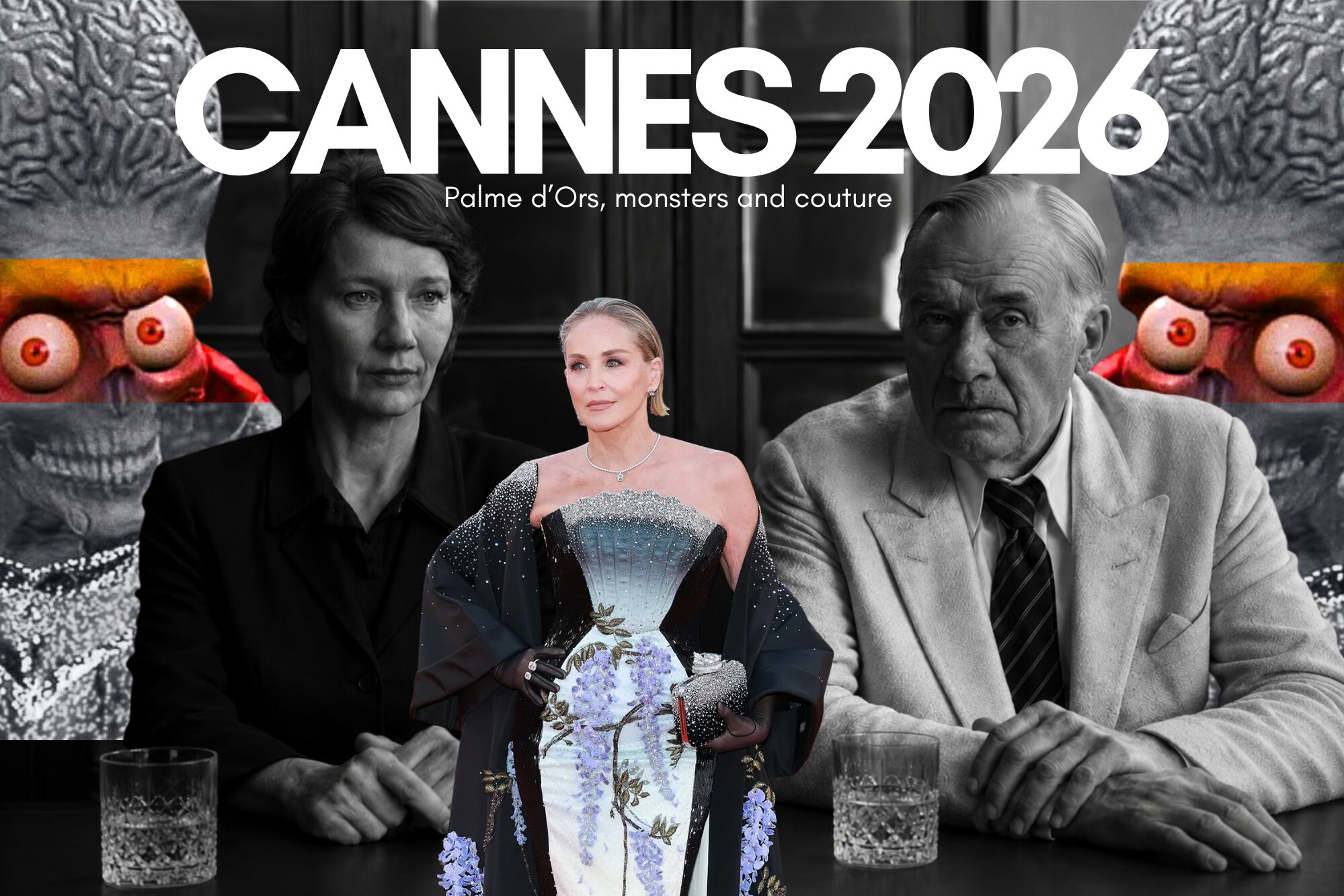
On the cinematic front, the critics’ favorite remains Fatherland by Paweł Pawlikowski: eighty-two minutes of severe black-and-white elevated by a devastating performance from Sandra Hüller that many already consider award-worthy. But the real shock arrived with Hope by Korean director Na Hong-jin, an enormously ambitious monster movie filled with aliens, gigantic scale, and spectacle entirely free of guilt, capable of conquering Cannes with twelve uninterrupted minutes of applause. Enough, perhaps, to confirm that even Cannes, historically allergic to blockbuster energy, is beginning to flirt more openly with cinematic excess.
And yet the contradiction at the center of European auteur cinema remains magnificently intact. No fewer than thirteen films in this year’s Cannes selection were financed through companies linked to Vincent Bolloré’s media empire, reminding everyone once again how French cinema loves denouncing capitalism while quietly depending on it behind the scenes. And so, between standing ovations and parties sponsored by impossibly expensive champagne, the most characteristically French kind of noise continues to circulate across the Croisette: informal accusations of cultural blacklists, tensions surrounding the influence of major media groups, and the increasingly widespread sense that independent European cinema still passes through only a handful of power centers. Cannes listens, debates, briefly scandalizes itself, and then immediately returns to the red carpet as though even controversy itself were part of the set design. After all, the festival has always excelled at transforming even contradiction into something extraordinarily elegant.
Elsewhere, James Gray impressed critics with Paper Tiger, Ryusuke Hamaguchi delivered another slow and hypnotic meditation on solitude and silence, while Pedro Almodóvar continues to ignore every unwritten rule of the festival with the confidence of a man who understood a very long time ago that rules are mostly decorative.
Then there is fashion, which at Cannes does not accompany cinema but temporarily replaces it. Demi Moore opened the festival in a sequined Jacquemus bustier seemingly designed exclusively to be photographed by camera flashes. Bella Hadid dominated the red carpet in an ice-colored Prada couture gown. And Chiara Ferragni returned to the Croisette after difficult years wearing vintage Roberto Cavalli with an unmistakable message embedded in every photograph: I’m back, and going unnoticed is not an option.
The festival will close on May 23, the Palme d’Or will finally be awarded, and John Travolta will almost certainly appear wearing a fourth beret. Until then, Cannes will continue doing what it has done for nearly eighty years: convincing the world that cinema remains enormous, glamorous, absurd, deadly serious, and absolutely necessary all at the same time.
Cannes 2026 continua a muoversi come una macchina perfettamente calibrata alimentata da cinema d’autore, glamour impossibile e persone vestite troppo bene per sembrare del tutto reali. Sulla Croisette i film competono per la Palma d’Oro, ma sempre più anche gli outfit, le entrate in scena, i rumor e la capacità di generare mitologia semplicemente camminando dieci metri al rallentatore sotto i flash dei fotografi.
La storyline dominante di questa edizione, però, non è legata a un film. Barbra Streisand salterà la cerimonia di chiusura dove avrebbe dovuto ricevere una Palma d’Oro onoraria a causa di un infortunio al ginocchio, un dettaglio stranamente fragile per qualcuno che per decenni è sembrato esistere su una scala più grande della semplice celebrità. L’omaggio avverrà comunque, naturalmente, perché Cannes capisce meglio di chiunque altro che sincerità e melodramma spesso sono esattamente la stessa cosa.
Nel frattempo John Travolta è diventato in qualche modo la mascotte involontaria del festival. Tre apparizioni pubbliche, tre baschi diversi, bianco, nero e blu navy, e improvvisamente è nata un’intera narrativa parallela attorno a un uomo che attraversa Cannes con la tranquilla sicurezza di qualcuno che potrebbe spiegarti perfettamente come allevare alpaca nel sud della Francia. Palma onoraria già ritirata, standing ovation garantita.
Sul fronte cinematografico, il favorito della critica resta Fatherland di Paweł Pawlikowski: ottantadue minuti di severissimo bianco e nero elevati da una performance devastante di Sandra Hüller che molti considerano già degna di premio. Ma la vera scossa è arrivata con Hope del regista coreano Na Hong-jin, un monster movie estremamente ambizioso pieno di alieni, scala gigantesca e spettacolo senza alcun senso di colpa, capace di conquistare Cannes con dodici minuti consecutivi di applausi. Abbastanza, forse, per confermare che persino Cannes, storicamente allergica all’energia blockbuster, stia iniziando a flirtare più apertamente con l’eccesso cinematografico.
Eppure la contraddizione al centro del cinema d’autore europeo rimane magnificamente intatta. Non meno di tredici film presenti nella selezione di Cannes di quest’anno sono stati finanziati attraverso società legate all’impero mediatico di Vincent Bolloré, ricordandoci ancora una volta come il cinema francese ami denunciare il capitalismo mentre continua discretamente a dipenderne dietro le quinte. E infatti sulla Croisette, tra una standing ovation e un party sponsorizzato da champagne impossibilmente costosi, continua a circolare anche il rumore più tipicamente francese possibile: accuse informali di blacklist culturali, tensioni sull’influenza dei grandi gruppi mediatici e la sensazione sempre più diffusa che il cinema europeo indipendente passi comunque attraverso pochissimi centri di potere. Cannes ascolta, discute, si scandalizza brevemente e poi torna immediatamente sul red carpet, come se persino la polemica facesse parte della scenografia. Dopotutto il festival ha sempre eccelso nel trasformare anche la contraddizione stessa in qualcosa di elegantissimo.
Altrove, James Gray ha impressionato la critica con Paper Tiger, Ryusuke Hamaguchi ha consegnato un’altra lenta e ipnotica meditazione sulla solitudine e il silenzio, mentre Pedro Almodóvar continua a ignorare ogni regola non scritta del festival con la sicurezza di un uomo che ha capito molto tempo fa che le regole sono soprattutto decorative.
Poi c’è la moda, che a Cannes non accompagna il cinema ma lo sostituisce temporaneamente. Demi Moore ha aperto il festival con un bustier Jacquemus ricoperto di paillettes che sembrava progettato esclusivamente per essere fotografato dai flash. Bella Hadid ha dominato il red carpet con un abito couture Prada color ghiaccio. E Chiara Ferragni è tornata sulla Croisette dopo anni difficili indossando un vintage Roberto Cavalli con un messaggio chiarissimo incorporato in ogni fotografia: sono tornata, e passare inosservata non è un’opzione.
Il festival si chiuderà il 23 maggio, la Palma d’Oro verrà finalmente assegnata e John Travolta comparirà quasi certamente con un quarto basco. Fino ad allora Cannes continuerà a fare ciò che fa da quasi ottant’anni: convincere il mondo che il cinema resti enorme, glamour, assurdo, serissimo e assolutamente necessario tutto nello stesso momento.