
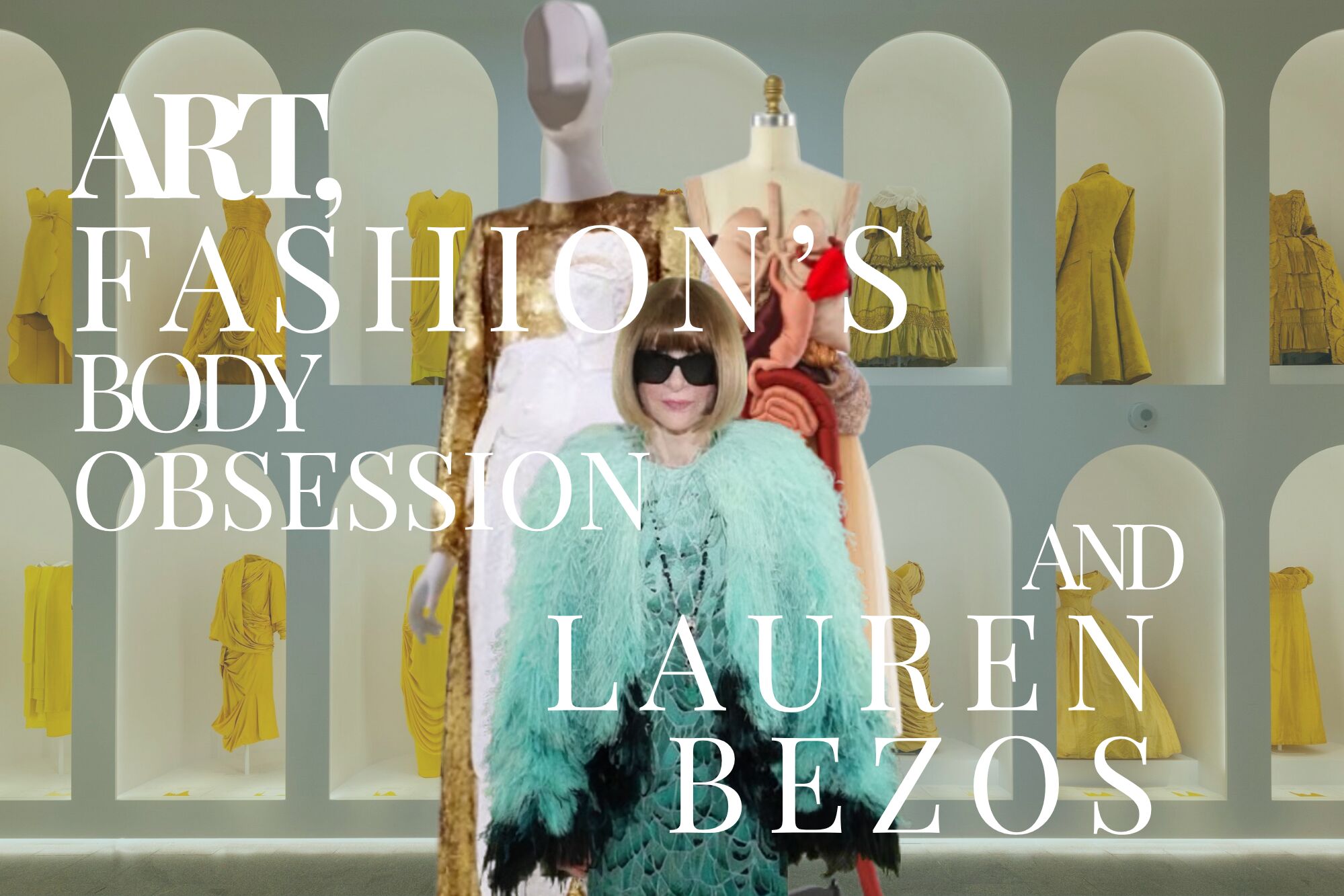
The Met Gala has barely finished coughing up its last sequins and, right on cue, the usual chattering classes are asking if it’s “Art” or merely a glorified circus for the one percent. The answer, delivered with a sharp intake of breath from the Costume Institute’s latest offering, Costume Art, is that it’s elegantly stopped pretending fashion has anything to do with getting dressed.

It’s about the body. Always the body. Compressed, corrected, and theatricalized into a social symbol. And let’s be clear: this entire production was, as ever, a masterclass in soft power. Despite the whispers of budget bloat and logistical nightmares, Anna managed to finance the project entirely on her own terms. Every velvet rope and Swarovski crystal was under her absolute, steely control.

The exhibition is almost ruthless in its juxtaposition, placing eighteenth-century corsetry alongside modern latex with a wink that says, “We’ve been torturing ourselves for centuries, darling. Fashion has never actually wanted to dress the human form; it has always wanted to rewrite it. Classical drapery meets beating crystal hearts. It’s not a wardrobe; it’s a biological takeover.

Last week’s carpet felt less like a parade and more like an extension of the vitrines. Sinéad Burke, sculpted in a structured black Christian Siriano, revived the brutal discipline of the corset, military elegance with a posture that demanded respect.

Then there was Heidi Klum, appearing as if she’d been chipped out of a block of Carrara marble, and Naomi Osaka, who provided the evening’s most visceral thrill in Robert Wun. Red crystals, simulated veins, the body as a literal spectacle of flesh and artifice.

What makes the 2026 iteration so deliciously pointed is its total lack of “authenticity.” Fashion has finally abandoned the bore of looking natural. We are in the era of the visual construction, identities designed to be consumed, not lived in.

And credit where it’s due: Anna Wintour did not miss. While the rest of the industry is busy chasing disposable TikTok micro-trends, she continues to run the Met Gala as a massive cultural operation. It is sharp, it is icy, and despite the astronomical costs, it was financed and orchestrated to her exact specifications. The “Ice Queen” has proven once again that in a world of chaos, she is the only one who truly knows how to keep things under control.

Now, we simply wait a year to see which part of the human anatomy she decides to colonize next and who will be paying the bill.
Il Met Gala ha appena smesso di tossire le sue ultime paillettes e, puntualmente, le solite classi chiacchierone si chiedono se sia “Arte” o semplicemente un circo glorificato per l’un per cento. La risposta, pronunciata con un elegante sospiro dall’ultima proposta del Costume Institute, Costume Art, è che la moda ha finalmente smesso di fingere di avere qualcosa a che fare con il vestirsi.

Si tratta del corpo. Sempre del corpo. Compresso, corretto e teatralizzato fino a diventare un simbolo sociale. E sia chiaro: tutta questa produzione è stata, come sempre, una magistrale lezione di soft power. Nonostante i sussurri su budget fuori controllo e incubi logistici, Anna è riuscita a finanziare il progetto interamente alle sue condizioni. Ogni cordone di velluto e ogni cristallo Swarovski erano sotto il suo assoluto e glaciale controllo.

La mostra è quasi spietata nei suoi accostamenti, mettendo corsetti del XVIII secolo accanto al latex contemporaneo con un sorriso che sembra dire: “Ci torturiamo da secoli, tesoro.” La moda non ha mai davvero voluto vestire il corpo umano; ha sempre voluto riscriverlo. Drappeggi classici incontrano cuori di cristallo pulsanti. Non è un guardaroba: è una conquista biologica.

Il red carpet della scorsa settimana sembrava meno una parata e più un’estensione delle vetrine della mostra. Sinéad Burke, scolpita in un rigoroso abito nero di Christian Siriano, ha riportato in vita la disciplina brutale del corsetto, un’eleganza militare con una postura che pretendeva rispetto.

Poi è arrivata Heidi Klum, come se fosse stata scolpita direttamente da un blocco di marmo di Carrara, e Naomi Osaka, che ha regalato il momento più viscerale della serata in Robert Wun. Cristalli rossi, vene simulate, il corpo trasformato in uno spettacolo letterale di carne e artificio.

Ciò che rende l’edizione 2026 così deliziosamente pungente è la sua totale assenza di “autenticità”. La moda ha finalmente abbandonato la noia dell’apparire naturale. Siamo nell’era della costruzione visiva, di identità progettate per essere consumate, non vissute.

E va dato il merito a chi lo merita: Anna Wintour non ha sbagliato un colpo. Mentre il resto dell’industria rincorre micro-trend usa e getta da TikTok, lei continua a gestire il Met Gala come una gigantesca operazione culturale. È affilato, glaciale e, nonostante i costi astronomici, finanziato e orchestrato esattamente secondo le sue specifiche. La “Regina di Ghiaccio” ha dimostrato ancora una volta che, in un mondo caotico, è l’unica che sappia davvero come mantenere il controllo.

Ora non ci resta che aspettare un altro anno per scoprire quale parte dell’anatomia umana deciderà di colonizzare la prossima volta e chi sarà disposto a pagarne il conto.