The Oscars 2026 f you expected the 2026 Oscars to be a glittering crossroads of global culture, you may have noticed something rather telling: it wasn’t. The evening felt strikingly American, with only a faint whisper of international presence and a tone far more subdued than its usual extravagant self. Low-key, almost so, and perhaps, in its restraint, a quiet reflection of the times we are living through. And yet, sobriety has never excluded spectacle.

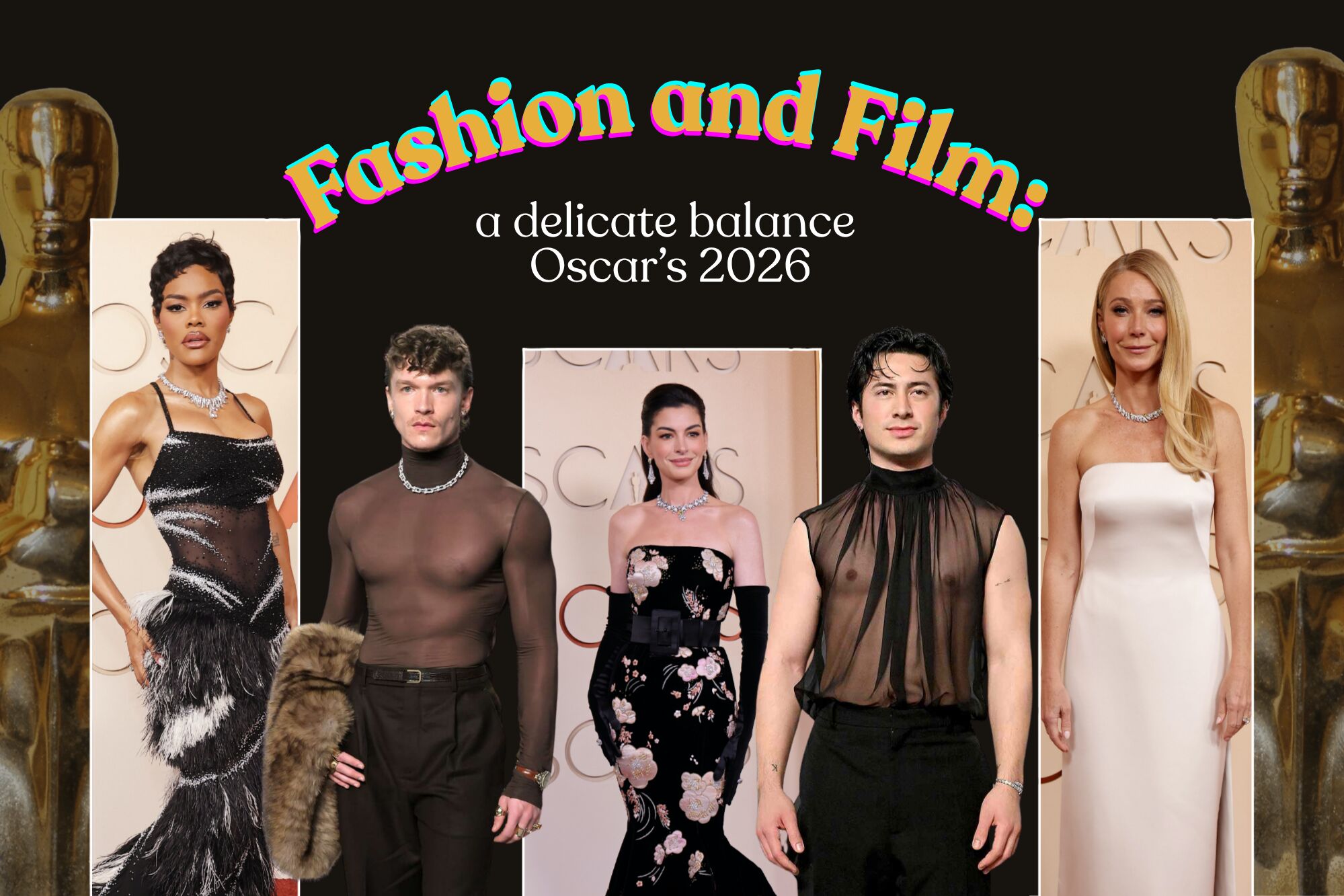
While many were busy applauding earnest speeches, I found myself captivated by the visual theatre unfolding instead. Teyana Taylor, wrapped in a cascade of Chanel feathers,  with a kind of deliberate sensuality that felt both modern and defiant, an echo of glamour, but sharpened for today. The evening’s most pointed moment, however, belonged to Timothée Chalamet. After dismissing ballet and opera as irrelevant in a recent interview, he found himself seated at the centre of an unspoken but unmistakable correction. The stage filled with classical performers; the host’s monologue circled him with precision; the room responded with that uniquely industry blend of politeness and quiet amusement. It was not cruel, but it was clear. A reminder, perhaps, that culture does not vanish simply because it is ignored. Elsewhere, the night oscillated between provocation and poise.

Connor Storrie and Hudson Williams embraced sheer irreverence, literally, turning heads in translucent looks that rejected subtlety altogether. In contrast, Anne Hathawayoffered something steadier: a composed, almost regal presence in Valentino couture, reminding us that elegance still holds power when everything else feels uncertain. Then there was Elle Fanning, drifting through the evening in a vision of softness and memory, her Givenchy gown blooming like wisteria in spring. For a fleeting moment, time seemed to pause around her. Even Gwyneth Paltrow—modern, minimal, grounded—felt anchored to the present in comparison to that almost otherworldly nostalgia. But beneath the surface, something had shifted. The extravagance felt measured, the risks calculated, the mood… contained. This was not the Oscars as a global fantasy.

It was the Oscars as a mirror, reflecting an industry, and perhaps a world, that is more cautious, more self-aware, and less certain of its place. And so here is the truth, stripped of feathers and flash: the night was not defined by its glamour, nor by its controversies, but by its restraint.

Because in times like these, even excess learns to whisper.

Se vi aspettavate che gli Oscar 2026 fossero uno scintillante crocevia della cultura globale, potreste aver notato qualcosa di piuttosto rivelatore: non lo sono stati. La serata è apparsa sorprendentemente americana, con solo un lieve sussurro di presenza internazionale e un tono molto più sobrio rispetto al consueto sfarzo. Discreta, quasi cauta e forse, proprio in questa misura, un riflesso silenzioso dei tempi che stiamo vivendo.

Eppure, la sobrietà non ha mai escluso lo spettacolo. Mentre molti erano impegnati ad applaudire discorsi sinceri, io mi sono ritrovato affascinato dal teatro visivo che si dispiegava davanti agli occhi. Teyana Taylor, avvolta in una cascata di piume Chanel, si muoveva con una sensualità deliberata che risultava al tempo stesso moderna e provocatoria, un’eco del glamour, ma resa più affilata per il presente.

Il momento più incisivo della serata, tuttavia, è appartenuto a Timothée Chalamet. Dopo aver liquidato balletto e opera come irrilevanti in una recente intervista, si è ritrovato seduto al centro di una correzione non detta ma inconfondibile. Il palco si è riempito di artisti classici; il monologo del presentatore gli ha girato attorno con precisione; la sala ha risposto con quella miscela tipicamente hollywoodiana di cortesia e divertita ironia. Non è stato crudele, ma è stato chiaro. Un promemoria, forse, che la cultura non scompare semplicemente perché viene ignorata.

Altrove, la serata oscillava tra provocazione e compostezza. Connor Storrie e Hudson Williams hanno abbracciato un’irriverenza totale, letteralmente, attirando gli sguardi con look trasparenti che rifiutavano qualsiasi forma di discrezione. Al contrario, Anne Hathaway ha offerto qualcosa di più stabile: una presenza composta, quasi regale, in Valentino couture, ricordandoci che l’eleganza conserva ancora il suo potere quando tutto il resto appare incerto.

Poi c’era Elle Fanning, che sembrava fluttuare nella serata come una visione fatta di morbidezza e memoria, il suo abito Givenchy che sbocciava come glicine in primavera. Per un attimo fugace, il tempo sembrava sospendersi attorno a lei. Persino Gwyneth Paltrow, moderna, minimale, concreta, appariva ancorata al presente in confronto a quella nostalgia quasi ultraterrena.

Ma sotto la superficie, qualcosa era cambiato. Lo sfarzo sembrava misurato, i rischi calcolati, l’atmosfera… contenuta. Non erano gli Oscar come fantasia globale. Erano gli Oscar come specchio, riflesso di un’industria, e forse di un mondo, più prudente, più consapevole di sé, e meno sicuro del proprio posto.

E così, ecco la verità, spogliata di piume e bagliori: la serata non è stata definita dal glamour, né dalle controversie, ma dalla sua misura.

Perché in tempi come questi, anche l’eccesso impara a sussurrare.