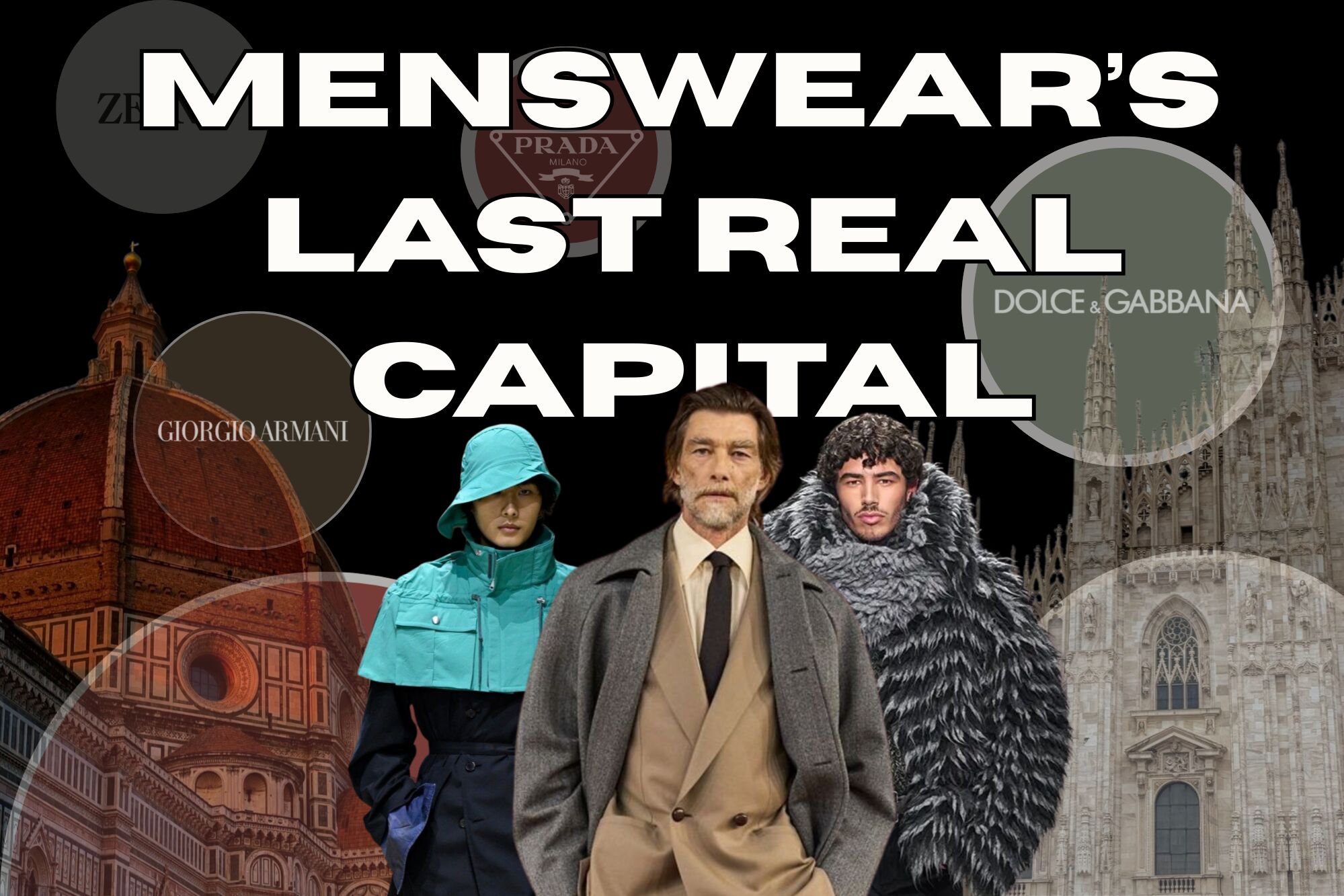

Se c’è un luogo in cui il menswear è ancora vivo, discusso e genuinamente influente, quello è l’Italia. Mentre le altre capitali della moda flirtano con la rilevanza, la Fashion Week Uomo italiana resta l’unico vero punto di riferimento internazionale per lo stile maschile: un rituale in due città che inizia a Firenze e culmina a Milano, dettando il tono di come gli uomini si vestiranno, si muoveranno e provocheranno nelle stagioni a venire
Tutto comincia con Pitti Uomo, la spina dorsale spirituale e stilistica della moda maschile. Firenze si trasforma in un palcoscenico vivente dove la sartoria incontra il teatro e i famigerati “peacocks” scendono in Fortezza da Basso in piena forza. Sì, c’è spettacolo — foulard di seta annodati con intenzione, doppiopetti indossati come armature — ma dietro la teatralità c’è qualcosa di profondamente serio: Pitti resta il più importante hub globale per buyer, brand e idee nel menswear. Qui non si viene solo per farsi vedere; si viene perché è ancora il luogo dove l’industria fa davvero business.
Poi arriva Milano, più tagliente, più rumorosa e decisamente polarizzante in questa stagione.
Nessuna sfilata ha acceso il dibattito quanto Dolce & Gabbana, che ha provocato reazioni forti e divise con la scelta di un casting composto esclusivamente da modelli bianchi. C’è chi ha lodato la purezza estetica e chi ha messo in discussione il messaggio, in un momento storico in cui alla moda si chiede di riflettere realtà culturali più ampie. In ogni caso, il risultato è stato inequivocabile: se ne è parlato. E nella moda, il silenzio è l’unico vero fallimento. All’estremo opposto si è collocata Prada, firmando quella che molti considerano la sfilata più cool e intellettualmente stimolante della stagione. Silenziosamente radicale, spogliata di ogni rumore superfluo, Prada ha dimostrato ancora una volta perché resta il punto di riferimento dell’avanguardia nel menswear. Le silhouette erano pensate, lo styling misurato, l’atmosfera inequivocabilmente moderna. Nessun effetto shock, solo idee, precisione e sicurezza. Quella che non ha bisogno di alzare la voce.
Ciò che l’Italia sa fare meglio di chiunque altro è bilanciare la contraddizione. Permette a tradizione e provocazione di coesistere. Capisce che il menswear può essere elegante ed esperimentale, commerciale e concettuale. Dalla disciplina sartoriale di Firenze alla frizione culturale di Milano, la moda italiana non insegue le tendenze, costruisce strutture.
In un panorama globale in cui le settimane della moda maschile spesso appaiono diluite o eccessivamente caute, l’Italia continua a guidare con chiarezza e convinzione. Non è sempre comoda, ma è sempre rilevante.
Quindi sì, reazioni contrastanti, opinioni forti, peacocks inclusi. Non è caos. È leadership.
Avanti così, Italia. Lo fai ancora meglio di tutti.